
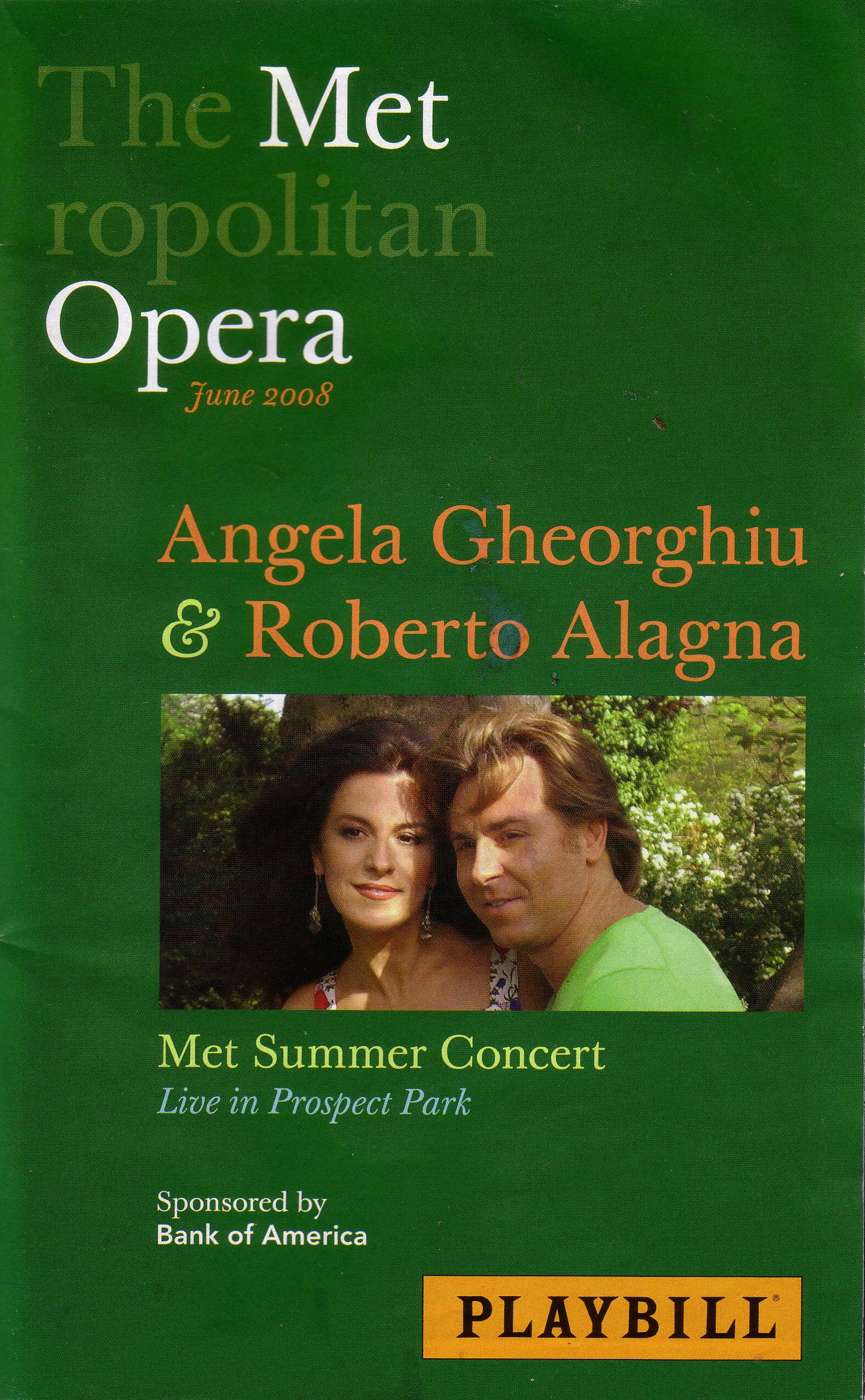
Thursday, June 26, 2008
Met Opera in Prospect Park


Monday, May 5, 2008
BAMTalk w/Paul Simon & Philip Glass
Obviously I've been taking advantage of all opportunities to see Paul Simon at BAM. Perhaps I am obsessed, but it's not often that one of your favorite artists makes so many appearances, in so many different guises, only minutes from your door. So, there I was, watching two amazing artists discuss the creative process. Unfortunately, I did not have the presence of mind to bring a notepad. I'm sure that most of the things they said weren't particularly profound and would not necessarily warrant taking notes, but I would like to try and remember a few things if only for my own reminiscing. So I'll scramble to get some things written down before I forget...
Paul Simon opened by asking Philip Glass a very broad question about composers in the 20th century. They eventually found ways to make it interesting, talking about Charles Ives and how to enjoy music on a conceptual level. Glass seemed the more humble of the two (not a big surprise), often giving praise to Simon's songwriting talent. Simon spent a good deal of time talking about his compositional process, which I'm guessing is a common topic for him. They illustrated their differences in the compositional process of bringing words and music together. Simon found a way to work with "Graceland" by starting with the music and setting words to it, whereas Glass usually starts with words (usually some else's). Simon attributed this to coming from a classical tradition of tone poems.
Simon talked about the importance of engaging the listener with music, rhythm in particular, and then holding their interest with the lyrics. He mentioned the art of using musical and lyrical clichés to give the ear a rest and the listener a chance to process. Simon explained the importance of a rhythmic conversation between the lyrics and music, and the significance or irony that conversation can convey.
Glass had a good quote about spending the first thirty years of your life trying to find a musical identity, and the rest trying to lose it. He talked about musical collaborations as a means to break free. Some of the most interesting stories came from their collaborations, and how communicating about music with people from other traditions challenged their concept of music and music vocabulary. Being forced to let go of terminology such as "G Major chord" or even naming a note "B" was a fascinating challenge.
Glass spoke about his commitment to performing music, and the significance of the performer's interpretation. Simon mentioned Aretha Franklin's performance of "Bridge Over Troubled Water" as being the interpretation he had in his head when he wrote the song (though he did highly acknowledge Art Garfunkel's version as well).
There was some other good stuff.... but I'm getting sleepy and my brain is turning to mush. Hopefully I'll remember some other things tomorrow.
Paul Simon opened by asking Philip Glass a very broad question about composers in the 20th century. They eventually found ways to make it interesting, talking about Charles Ives and how to enjoy music on a conceptual level. Glass seemed the more humble of the two (not a big surprise), often giving praise to Simon's songwriting talent. Simon spent a good deal of time talking about his compositional process, which I'm guessing is a common topic for him. They illustrated their differences in the compositional process of bringing words and music together. Simon found a way to work with "Graceland" by starting with the music and setting words to it, whereas Glass usually starts with words (usually some else's). Simon attributed this to coming from a classical tradition of tone poems.
Simon talked about the importance of engaging the listener with music, rhythm in particular, and then holding their interest with the lyrics. He mentioned the art of using musical and lyrical clichés to give the ear a rest and the listener a chance to process. Simon explained the importance of a rhythmic conversation between the lyrics and music, and the significance or irony that conversation can convey.
Glass had a good quote about spending the first thirty years of your life trying to find a musical identity, and the rest trying to lose it. He talked about musical collaborations as a means to break free. Some of the most interesting stories came from their collaborations, and how communicating about music with people from other traditions challenged their concept of music and music vocabulary. Being forced to let go of terminology such as "G Major chord" or even naming a note "B" was a fascinating challenge.
Glass spoke about his commitment to performing music, and the significance of the performer's interpretation. Simon mentioned Aretha Franklin's performance of "Bridge Over Troubled Water" as being the interpretation he had in his head when he wrote the song (though he did highly acknowledge Art Garfunkel's version as well).
There was some other good stuff.... but I'm getting sleepy and my brain is turning to mush. Hopefully I'll remember some other things tomorrow.
Twitter in Plain English
I recently started using Twitter more often. If you have no idea what that is, check out this video, then click the "follow me on Twitter" button on the left:
Sunday, April 27, 2008
Paul Simon at BAM: American Tunes
This was the third concert I've been to this month. I was going to say it was the best of the three, but I think it's better to think of it as one long show, perhaps presented in three acts. Paul Simon sure has covered a lot of ground in the course of his career. This show seemed a little hectic in that he was drawing from many different albums, including some songs made famous when working with Garfunkel, and featuring a lot of guest artists from a wide variety of musical genres. I liked the guests in this show more than those in "Under African Skies." They each seemed stronger performers in their own right. I was pleased to be introduced to Grizzly Bear (Brooklyn product!), Amos Lee and Gillian Welch. David Rawlings, performing with Welch, was a definite highlight. He's a great guitar player, and they sing together really well. Josh Groban sang "America," "Silent Eyes," and "Bridge Over Troubled Water." The girl next to me was snickering through most of "America." I understand Josh Groban is perhaps too mainstream, syrup-pop for hip Brooklynites who were conceived to "Mrs. Robinson," but really, give the guy a chance. He has a great voice, even if it's been mostly spent on "O Holy Night" and "You Raise Me Up." Anyway...
Interesting fact: I was talking with Juanita, mother of my student, Meilei, about the show. Juanita works in Paul Simon's office and helped me get these tickets. I was telling her about Grizzly Bear's version of "Mother and Child Reunion" and how it was rather dark and foreboding, in contrast to the bouncy and buoyant original. She gave me the inside scoop on the lyrics: Mother and Child Reunion is the name of a special dish at a Chinese restaurant Paul used to frequent. The dish contains chicken and eggs. It's only a motion away.
Paul Simon, Gillian Welch and David Rawlings perform "Sound of Silence"
Paul Simon and Josh Groban perform "Bridge Over Troubled Water"
Interesting fact: I was talking with Juanita, mother of my student, Meilei, about the show. Juanita works in Paul Simon's office and helped me get these tickets. I was telling her about Grizzly Bear's version of "Mother and Child Reunion" and how it was rather dark and foreboding, in contrast to the bouncy and buoyant original. She gave me the inside scoop on the lyrics: Mother and Child Reunion is the name of a special dish at a Chinese restaurant Paul used to frequent. The dish contains chicken and eggs. It's only a motion away.
Paul Simon, Gillian Welch and David Rawlings perform "Sound of Silence"
Paul Simon and Josh Groban perform "Bridge Over Troubled Water"

Friday, April 18, 2008
Yamaha Disklavier Mark IV: Grand Piano with Internet Connection
NYTimes Review

I'd like one of these for my birthday, please. (Anybody got a spare $42,000?)
I'd like one of these for my birthday, please. (Anybody got a spare $42,000?)
Blogged with the Flock Browser
Monday, April 14, 2008
Paul Simon at BAM: David Byrne steals the show with "You Can Call Me Al" & "I Know What I Know"
Last Friday I went to Paul Simon's "Under the African Skies" concert at the Brooklyn Academy of Music. It was the second in the series of three that Simon is performing at BAM this month. The first show I saw was music from "The Capeman," Simon's short-lived Broadway musical. That show was an exciting introduction for me to a side of Simon's music I hadn't yet explored, a mix of salsa and doo-wop. I wish I could have seen the show on Broadway. "Under African Skies" was all the music I had grown up listening to on the albums "Graceland" and "Rhythm of the Saints." It was wonderful to see it live. I remembered seeing Ladysmith Black Mambazo at Northrop Auditorium on the U of M campus back when I was probably eight or nine years old. My Dad used to play "Graceland" while doing the dishes, and my brother and I would dance and run around the house. That album has the most infectious energy. Every time it got to the bass solo break on "You Can Call Me Al" I'd try and spin around on the tile kitchen floor, break-dance style.
So, it was a little hard for me to enjoy some of the singers that Simon brought in to cover his songs. Vusi Mahlasela fit the bill, and his voice carried well over Ladysmith and the band. Kaïssa was also entertaining, but I often lost track of her voice in the lower registers. It may have been the sound man's fault. Luciana Souza was a good fit for "Born at the Right Time," being that she was five months pregnant. Her duet with Simon was also very touching. However, the overall energy of the show was very low-key until David Byrne showed up to cover "You Can Call Me Al" and "I Know What I Know."
There were a few twenty-something women sitting near me that seemed like they were going to fall asleep near the middle of the concert. When David Byrne came on stage, they perked up. Once Byrne was featured, everybody was dancing in their seats. He really stole the show.
I love Paul Simon's music, and I like his relaxed approach to performing. I understand that not everyone's attention is held by the music alone. I was going to say since he's getting older maybe it's good to have some other artists pump up the crowd, but David Byrne ain't no spring chicken at 56. Kudos.
I wouldn't call myself a Talking Heads fan (I heard "Burning Down the House" on the radio, that's about it), but I thought Byrne was a perfect fit for these Simon tunes. He successfully honored the spirit and sound of the original performance and at the same time infused the song with his own unique sound and expression.
So, it was a little hard for me to enjoy some of the singers that Simon brought in to cover his songs. Vusi Mahlasela fit the bill, and his voice carried well over Ladysmith and the band. Kaïssa was also entertaining, but I often lost track of her voice in the lower registers. It may have been the sound man's fault. Luciana Souza was a good fit for "Born at the Right Time," being that she was five months pregnant. Her duet with Simon was also very touching. However, the overall energy of the show was very low-key until David Byrne showed up to cover "You Can Call Me Al" and "I Know What I Know."
There were a few twenty-something women sitting near me that seemed like they were going to fall asleep near the middle of the concert. When David Byrne came on stage, they perked up. Once Byrne was featured, everybody was dancing in their seats. He really stole the show.
I love Paul Simon's music, and I like his relaxed approach to performing. I understand that not everyone's attention is held by the music alone. I was going to say since he's getting older maybe it's good to have some other artists pump up the crowd, but David Byrne ain't no spring chicken at 56. Kudos.
I wouldn't call myself a Talking Heads fan (I heard "Burning Down the House" on the radio, that's about it), but I thought Byrne was a perfect fit for these Simon tunes. He successfully honored the spirit and sound of the original performance and at the same time infused the song with his own unique sound and expression.
Subscribe to:
Posts (Atom)